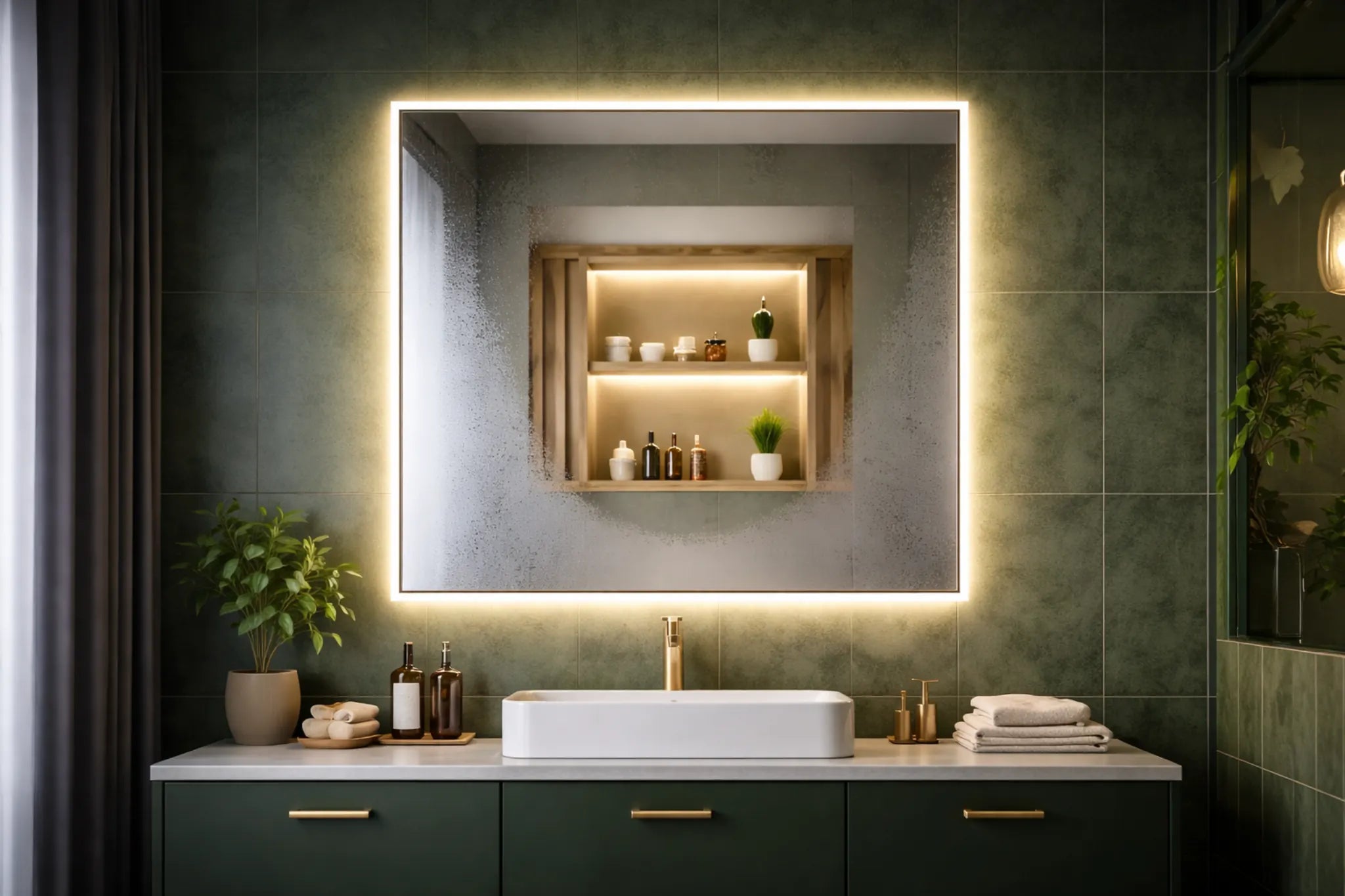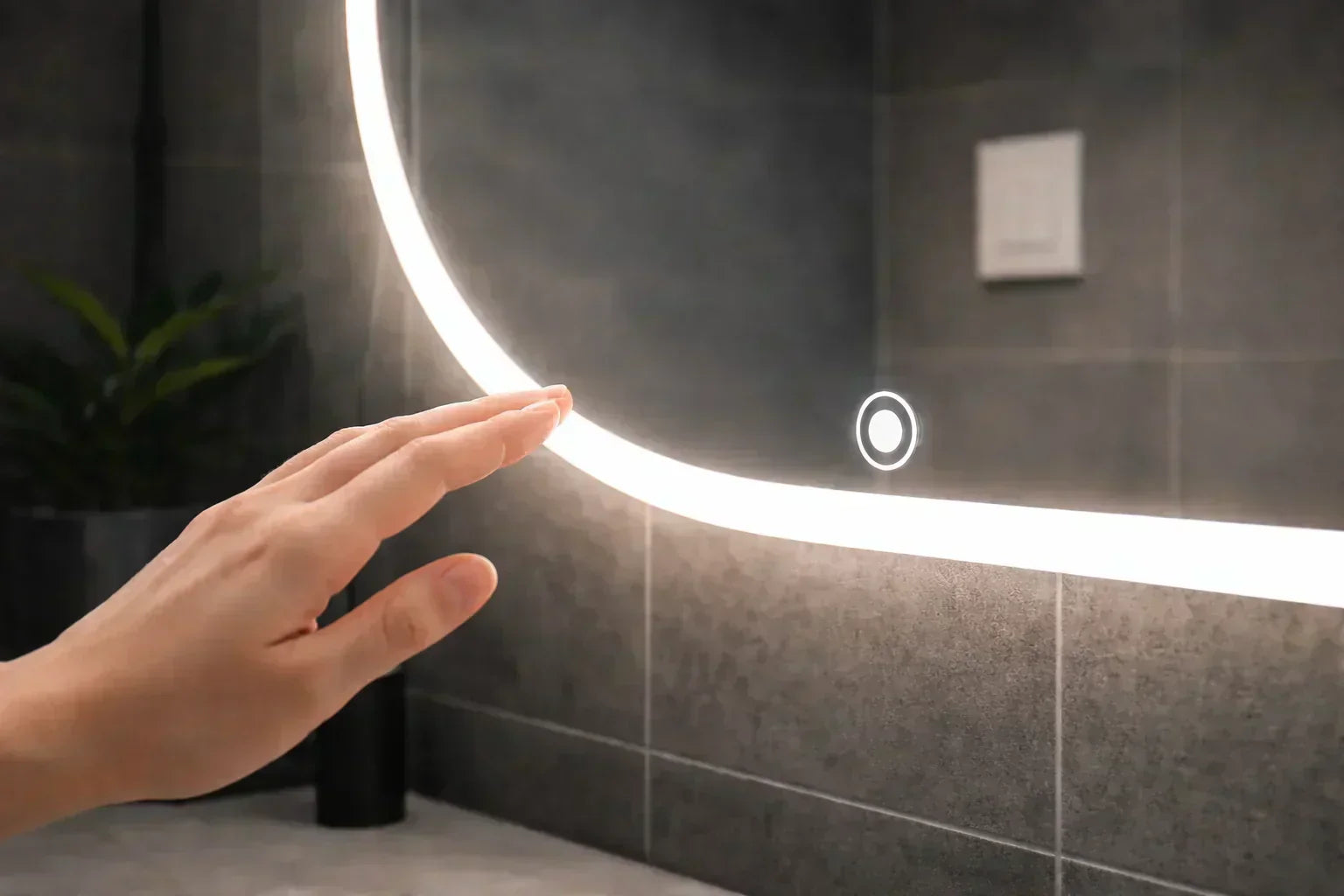

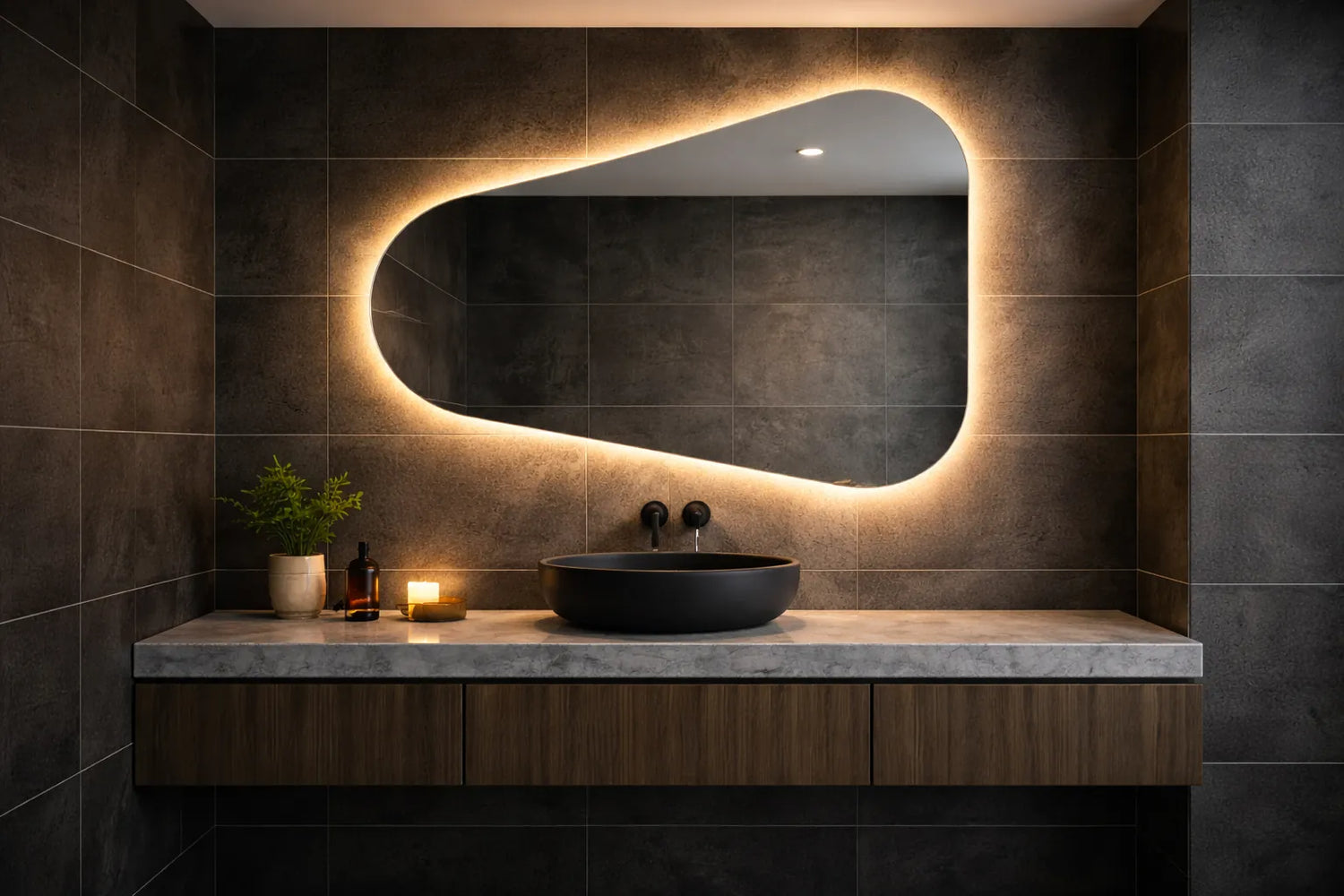
Most “expensive-looking” bathrooms aren’t expensive because of the tiles. They look expensive because everything feels intentional — and the mirror is usually the first clue. When the mirror fits the vanity, the lighting feels flattering, and the layout looks planned, the whole room levels up.
An LED mirror layout refers to how the mirror’s size, shape, placement, and lighting type (frontlit or backlit) are positioned in relation to the vanity and wall. The right layout creates visual balance, flattering face lighting, and a built-in architectural feel — which is why it instantly elevates a bathroom.
Key takeaways:
- The easiest premium rule: choose a mirror the same width as the vanity (or 5–15 cm narrower).
- Frontlit is best for face tasks (makeup, shaving). Backlit is best for atmosphere (halo glow).
- 4000K is the safest everyday choice. 3000K feels warm/spa-like. 6000K is crisp daylight (can feel harsh for makeup). CCT is adjustable and best for shared bathrooms.
If you want the supporting deep-dives (worth bookmarking):
Read: Backlit vs Frontlit LED Mirrors
Read: Color temperature (3000K vs 4000K vs 6000K vs CCT)
Before you start: one simple “designer” rule
If you’re unsure, do this: stand in front of your vanity and imagine the mirror as part of the furniture, not a decoration. When it looks like it belongs to the vanity (width, height, alignment), it automatically feels higher-end.
1) The Perfect Match (mirror the same width as the vanity)
This is the layout that almost never fails. It’s tidy, calm, and balanced — like a nice hotel bathroom that doesn’t try too hard.
A rectangular or softly rounded-rectangle mirror works best here. If this is the mirror you’ll actually use for getting ready, frontlit lighting is the practical choice because it lights your face evenly. If you already have good bathroom lighting and want the room to feel softer, backlit gives you that clean glow.
For color temperature, 4000K is the safest everyday option (neutral and flattering). If you share the bathroom or like changing the mood, choose CCT so you can adjust.
2) The Oversized Statement (slightly wider than the vanity)
This is the trick that makes a bathroom look more architectural. The wall suddenly feels designed, not just filled.
If you want this to look expensive, go backlit. That halo glow is what makes the mirror feel built-in and premium. Shapes that work well: a wide rectangle or a pill/oval shape.
For the vibe: 3000K gives you warm spa energy. CCT is better if you want warm evenings but still want a bright “I need to wake up” setting in the morning.
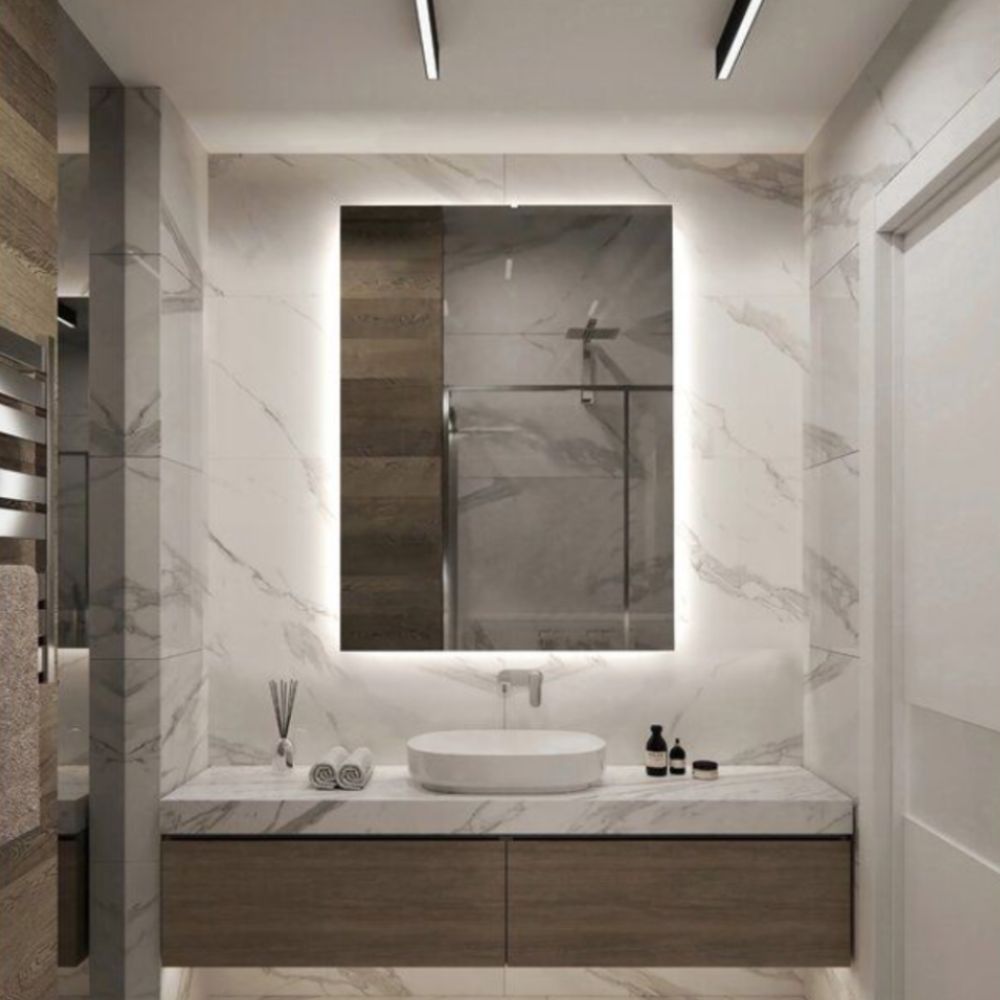
3) The Tall Vertical (height makes the bathroom feel bigger)
If your bathroom is narrow, a vertical mirror is basically a cheat code. It makes the space feel taller and more intentional without changing anything else.
Go for a tall rectangle or a tall, rounded rectangle. If you’ll use it for skincare, shaving, or makeup, lean frontlit. Vertical mirrors look great with 4000K because it feels clean and modern, but again, CCT is the most flexible if different people use the same bathroom.

4) The Soft Circle (round mirror with a clean glow)
Round mirrors look expensive when they’re the right size — and a little underwhelming when they’re too small.
If you love that calm, boutique-hotel look, do a backlit round mirror. It softens sharp tile lines and makes the room feel curated. For warmth, go 3000K. For a crisper modern look, go 4000K.
This layout is especially good if your bathroom has lots of straight lines (rectangular tiles, sharp vanity edges). The circle makes everything feel more relaxed.
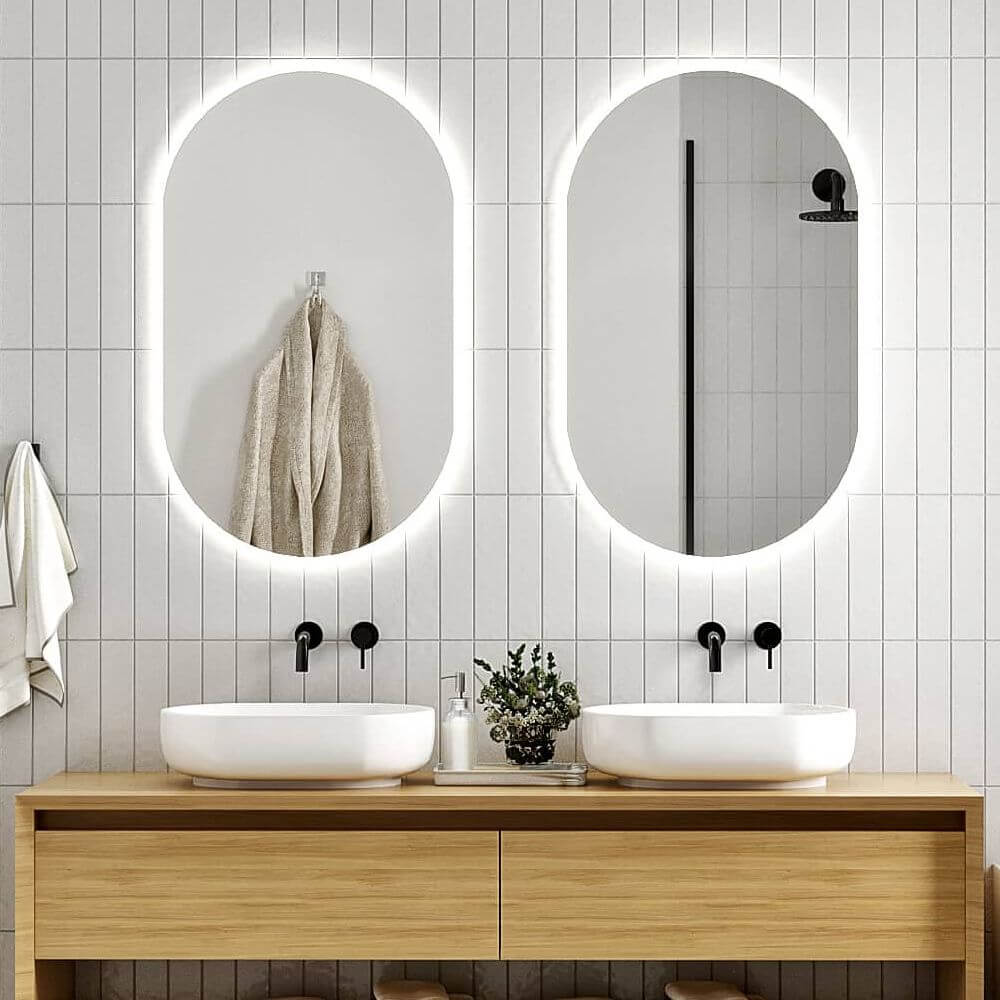
5) The Hotel Twin (double vanity, matching mirrors)
This one is classic. Two mirrors instantly signal premium — but only when the alignment is perfect.
If two people get ready at the same time, frontlit is genuinely useful. If it’s more about atmosphere and the look, backlit feels more luxurious. For shared bathrooms, CCT is the peacekeeper — everyone can set the light how they like.
The main thing: keep both mirrors the same size and height. If one sits even slightly higher, the whole wall starts to look accidental.
6) The Intentional Asymmetry (mirror shifted to one side)
This layout looks expensive because it feels custom — like it was designed around the room, not copied from a template.
It works best when the mirror is shifted, and something else balances the wall: a shelf, a pendant, a tall cabinet, even a towel ladder. Choose an oval or a rounded rectangle. Backlit is usually the better choice here because the glow adds visual weight and helps the composition feel balanced.
If you want it cozy and spa-like, choose 3000K. If you want the option to go brighter, choose CCT.
7) The Built-In Custom (wall-to-wall look)
If you want the most expensive look, it’s usually this: a mirror that feels like part of the architecture.
A wide rectangle works best, especially if it follows your tile lines or fills a specific wall zone. For that luxury effect, backlit looks the most seamless. If this is your main grooming mirror, you might want frontlit (or strong task lighting in the room). For premium control, CCT fits perfectly — warm when you want it, neutral when you need it.
Quick cheatsheet: backlit vs frontlit
Frontlit = best for face lighting (makeup, shaving, skincare).
Backlit = best for ambience (halo glow, spa/hotel look).
Read: Backlit vs Frontlit LED Mirrors
Quick cheatsheet: 3000K vs 4000K vs 6000K vs CCT
3000K = warm, cozy, spa/hotel mood.
4000K = neutral everyday bathroom lighting.
6000K = cool/bright daylight look (crisp, but can feel harsh for makeup)
CCT = adjustable, best for shared bathrooms.
Read: Color temperature (3000K vs 4000K vs 6000K vs CCT)
FAQs
Is backlit lighting enough for makeup?
Backlit lighting creates a soft halo glow but does not illuminate the face directly. For precise makeup or shaving, frontlit or additional task lighting is recommended.
Is 6000K good for a bathroom mirror?
6000K provides crisp daylight-style brightness. It can feel harsh for everyday grooming but works well in modern, high-contrast bathrooms.
What mirror size looks most expensive?
A mirror that matches the vanity width or is 5–15 cm narrower usually looks the most balanced and premium.
Should bathroom mirrors be centered?
Not always. Centered layouts feel classic and symmetrical, while intentional asymmetry can look custom and architectural.
What to shop next
Shop by room: Bathroom
If you want a safe starting point, browse Best-Sellers.
If you want a mirror that fits your exact wall/vanity setup, order Custom.