

Small bathrooms don’t hide mistakes. A mirror that’s even a little too wide can look cramped, clash with a cabinet, or feel awkward every day. The good news is that you don’t need designer instinct to get it right — you just need a few measurements and a couple of simple rules.
This guide will help you choose a mirror size that fits your vanity, keeps the space feeling open, and (if you’re choosing an LED mirror) gives you better light without making the wall look busy.
Quick answer
In most small bathrooms, a mirror looks best when it matches the vanity width or is slightly narrower (about 5–15 cm). This keeps a bit of visible wall on both sides so the space feels more open. If your wall is tight, prioritize centering over the sink and leaving clearance for cabinet doors and drawers.
If you want to browse options that work well for small spaces, start with our Bathroom LED Mirrors collection.
Measure first (this takes 2 minutes)
You only need three measurements:
- Vanity width
- Free wall width (between obstacles like cabinets, tile edges, and shelves)
- Vertical space (from vanity top to light fixture or ceiling)
The width rule that keeps small bathrooms looking balanced
In most small bathrooms:
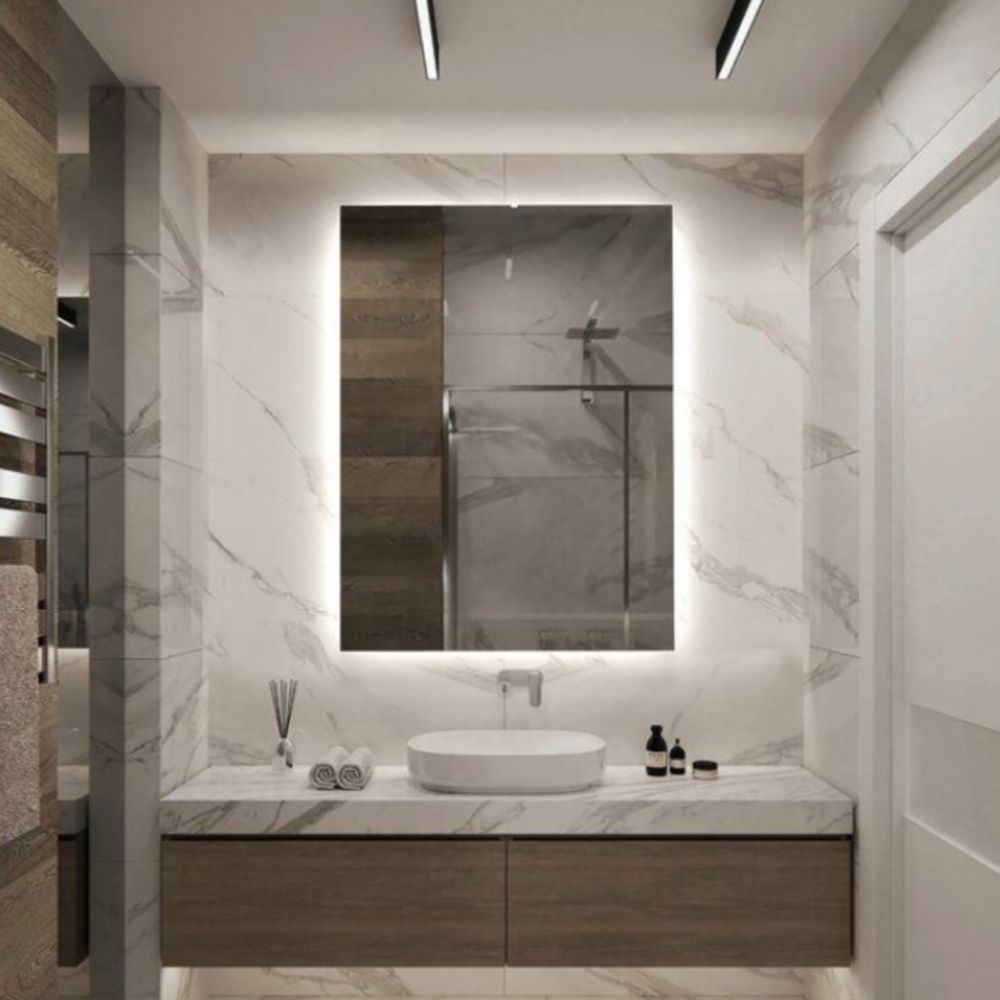
- Best: mirror = same width as vanity
- Safe: mirror = 5–15 cm narrower
- Avoid (usually): mirror wider than vanity
If a tall cabinet sits close to the vanity, going slightly narrower almost always looks more premium.
Quick size examples (common vanity widths)
If your vanity is 60 cm, a mirror around 45–60 cm wide usually looks right.
If your vanity is 80 cm, a mirror around 65–80 cm is a safe range.
If your vanity is 100 cm, a mirror around 85–100 cm works well (check side clearance first).
Mirror height (keep it practical, not perfect)
Height affects how open the bathroom feels, but in small spaces, it’s also about avoiding clutter. A mirror that’s too tall can compete with lighting, shelves, and accessories.
A good approach is to choose a height that gives a comfortable view of your face and upper body, and still leaves space above for a clean layout.
What to watch for in small bathrooms
- Try to leave 5–10 cm of space from cabinets/walls if possible
- If space is tight, even 2–5 cm can work if the mirror is centered
- Check door/cabinet swing so nothing bumps the mirror edge
If something visually touches the mirror edge (cabinet line, shelf, tile border), it usually looks too tight.
Pick a shape that helps the space feel bigger
If your bathroom is tight, the mirror shape can make the wall feel either calmer or more crowded. Here’s a simple way to choose:
If the wall is narrow, then go with Rectangular (clean lines, most efficient viewing area).
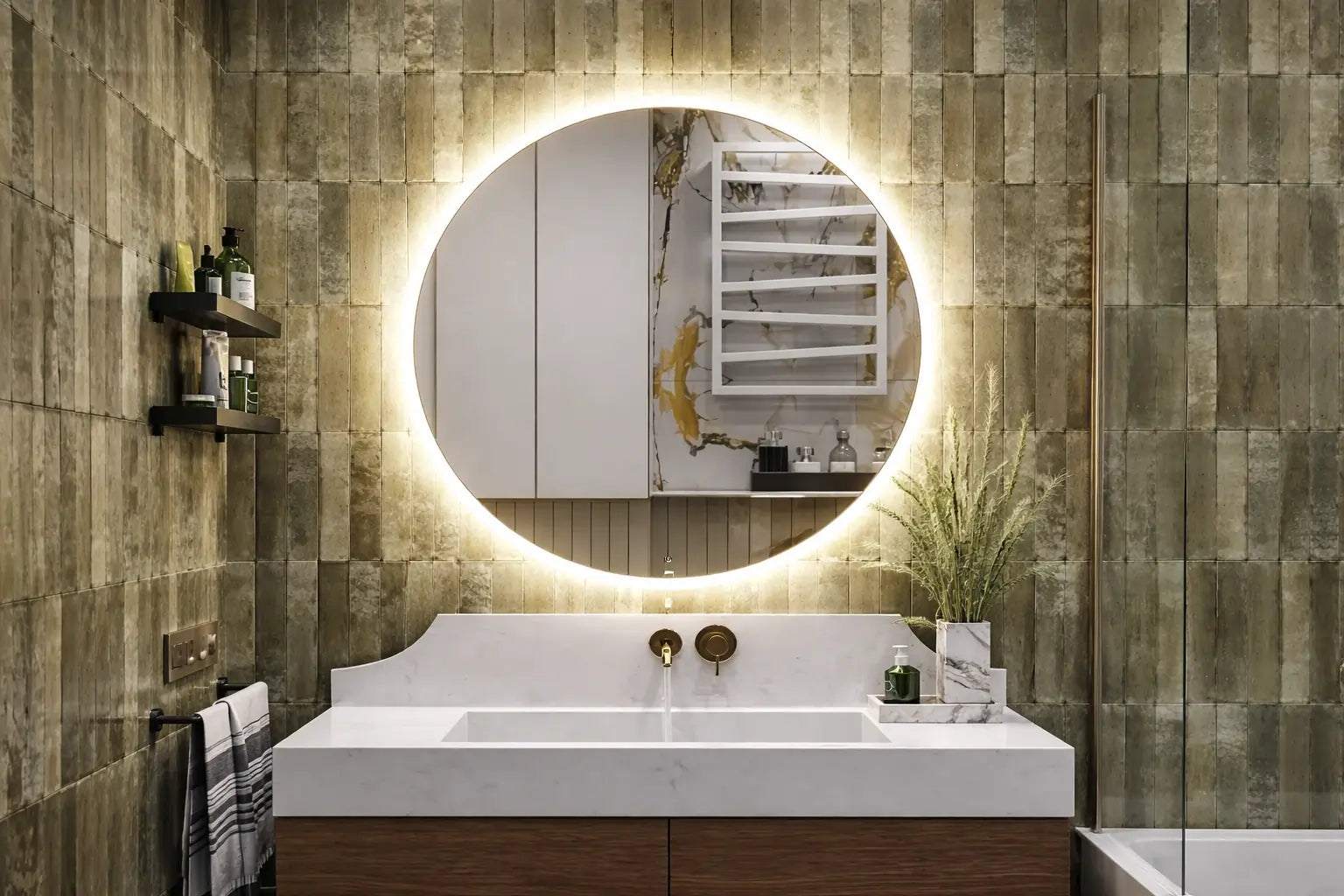
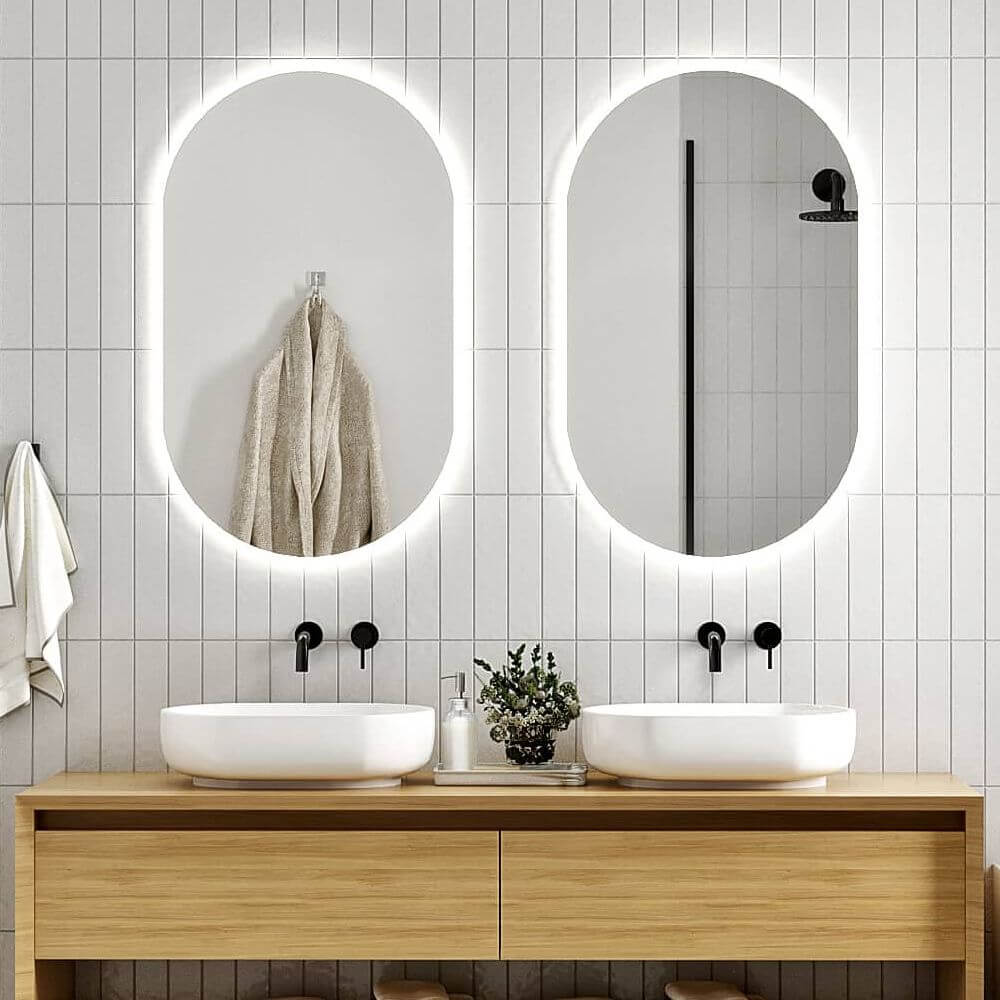
If you have a cabinet close to the vanity, then go with Round or Pill Oval (softer edges, looks less squeezed).
If you want a design statement: Asymmetrical can work — but only if your wall is visually quiet (no busy tiles + no shelves competing).

LED mirrors in small bathrooms
LED mirrors add light and also add visual presence — especially backlit models with a halo glow. That’s why size and brightness control matter more.
Best LED features for small bathrooms (what matters most)
In a small bathroom, features should solve real problems — glare, fog, and harsh light.
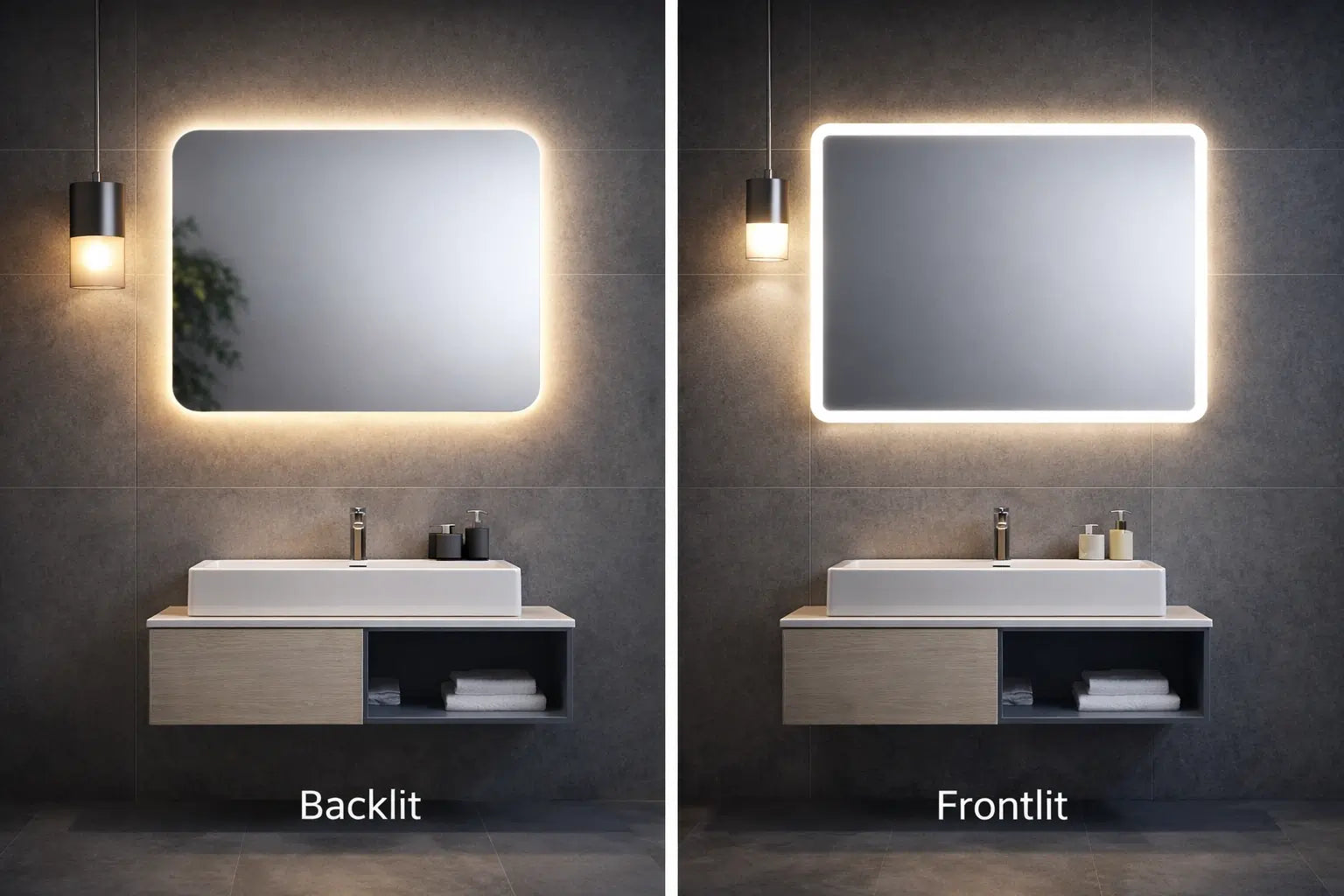
- Backlit is best if you want the room to feel more open (soft halo effect).
- Frontlit is best if you need stronger task light (makeup/shaving).
- Anti-fog is worth it if your mirror steams up often.
- Dimmable brightness (so it doesn’t feel harsh at night)
Makeup features are great for close-up routines, but not essential for everyone.
If you’re still deciding between backlit vs frontlit (or which features are worth paying for), this LED mirror buyer’s guide breaks it down step by step.
Common small bathroom sizing mistakes
Most mirror regrets come from a few predictable mistakes: going too wide, ignoring door/cabinet swing, and hanging the mirror too high so it feels disconnected from the vanity. If you keep your mirror centered with the sink and leave even a small amount of breathing room, your bathroom will instantly look more intentional.
FAQ
Should a mirror be the same width as the vanity in a small bathroom?
Usually, yes. In small bathrooms, the cleanest look is a mirror that matches the vanity width or is slightly narrower (5–15 cm). That keeps the wall from feeling crowded.
Can a mirror be wider than the vanity in a small bathroom?
It can be, but it’s often what makes the space look cramped. Only go wider if you still have proper clearance and the layout looks balanced.
Is a round mirror better for a small bathroom?
Often, yes. Round mirrors soften tight layouts and work especially well next to tall cabinets.
What LED lighting is best for a small bathroom?
Choose an LED mirror with dimming and adjustable color temperature. It’s the easiest way to make a small bathroom feel comfortable in both morning and evening light.
How high should I hang the mirror?
High enough for comfortable daily use, but not so high that it feels disconnected from the vanity. In small bathrooms, mirrors are often hung too high, which makes the whole setup feel less practical.
Final thought
The best mirror size for a small bathroom is usually simple, it should match the vanity width (or go slightly narrower), keep the mirror centered, and protect breathing room around the edges. If you choose an LED mirror, prioritize dimming and adjustable color temperature — those two features make the biggest everyday difference.
If you want to see options that fit everyday bathroom use, browse our Bathroom LED Mirrors collection.