
Looking for LED mirror design ideas that actually work in real homes? An LED mirror can instantly change how a room feels — making a small bathroom look larger, softening a minimalist space, or adding a calm, hotel-style glow without extra lighting clutter. In this blog post, you’ll get modern, room-by-room inspiration plus simple rules for choosing mirror size, shape, and lighting so it looks intentional and works for everyday routines. If you’re still deciding what to buy, start with our LED Mirror Buyer’s Guide.
LED mirror design ideas that look intentional in modern interiors
Most designer-looking bathrooms follow a few simple principles. The mirror isn’t just chosen because it’s pretty — it fits the space. If you get these basics right, nearly any mirror style can look premium.
First, focus on proportion. A mirror that’s too small over a vanity can make the whole wall look unfinished. A mirror that fills the space more confidently often looks more modern and expensive. Second, match the shape to the room’s lines. Bathrooms are full of rectangles (tiles, vanities, niches), so the mirror shape either reinforces that clean geometry or softens it. Third, choose lighting that suits your interior tones, because the wrong color temperature can make even a beautiful room feel “off.”
How big should a mirror be over a vanity?
This is one of the most searched design questions for a reason — size makes or breaks the look.
As a general rule, your mirror should visually match the vanity width or be slightly narrower. If it’s a single vanity, a mirror that feels “anchored” to the vanity will look intentional. If it’s a double vanity, you’ll choose between one large mirror (more seamless, hotel-like) or two mirrors (more symmetrical, structured). Both can be correct — the best choice depends on the wall layout and your style.
If you’re deciding between two sizes, the bigger option often looks more premium, especially in small bathrooms where the mirror can visually expand the space.
Round vs rectangular LED mirror: which shape fits a modern interior?
If you want modern bathroom mirror ideas that are easy to apply, start with shape. It’s the quickest way to set the mood.
A round vs rectangular LED mirror decision is really about what your room needs:
- Round mirrors feel softer, calmer, and more spa-like. They’re perfect when your bathroom is very angular or “boxy.”
- Rectangular mirrors feel clean, architectural, and minimal. They’re ideal when you want everything aligned and structured.
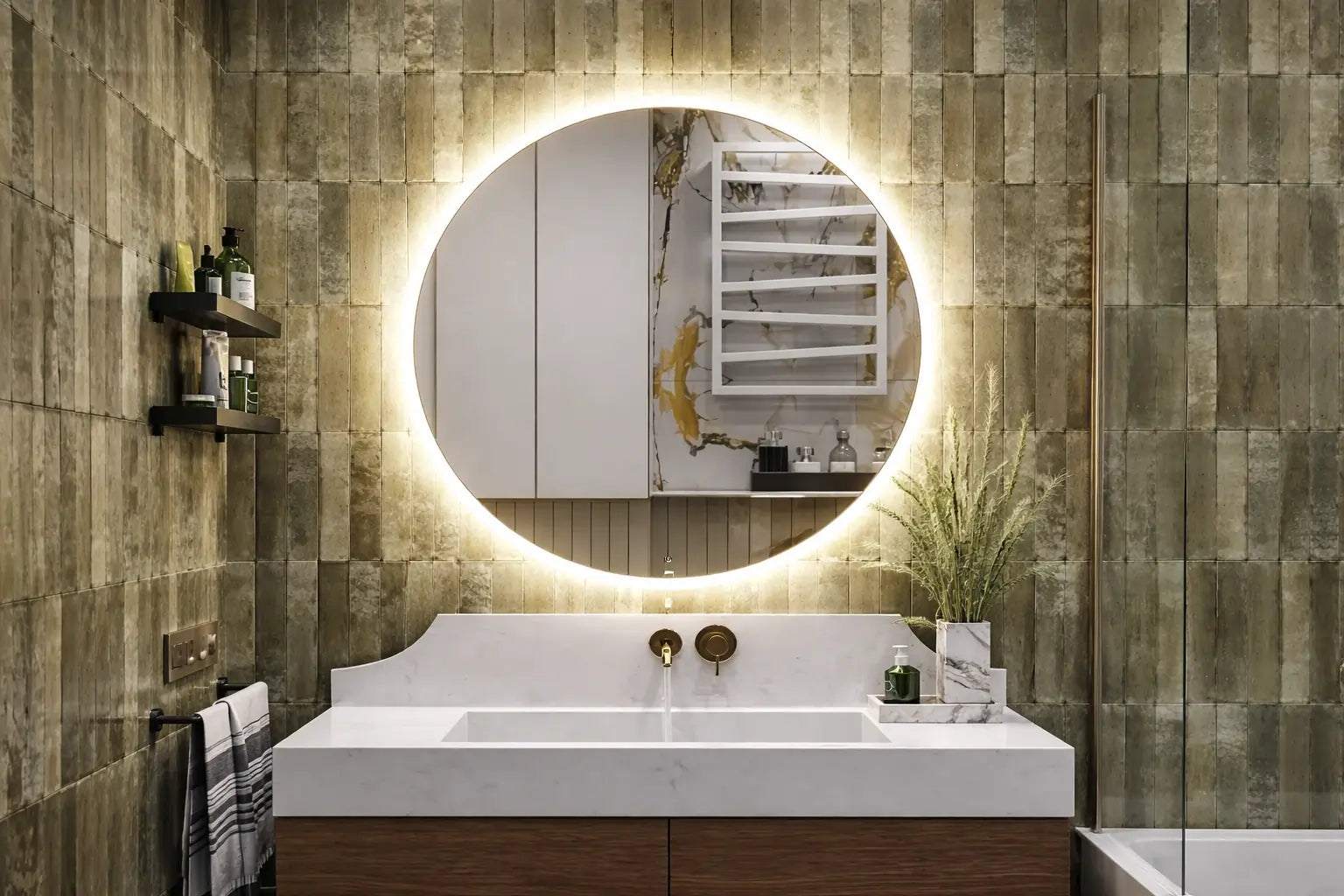
If your tiles are strong and geometric (grid layouts, sharp grout lines), round mirrors balance the look. If your bathroom is already soft and warm, a rectangular mirror can add a crisp, modern edge.

Modern LED mirror ideas by interior style
Different interiors call for different mirror personalities. The goal is to make the mirror feel like it belongs, not like it was added later.
Minimalist modern
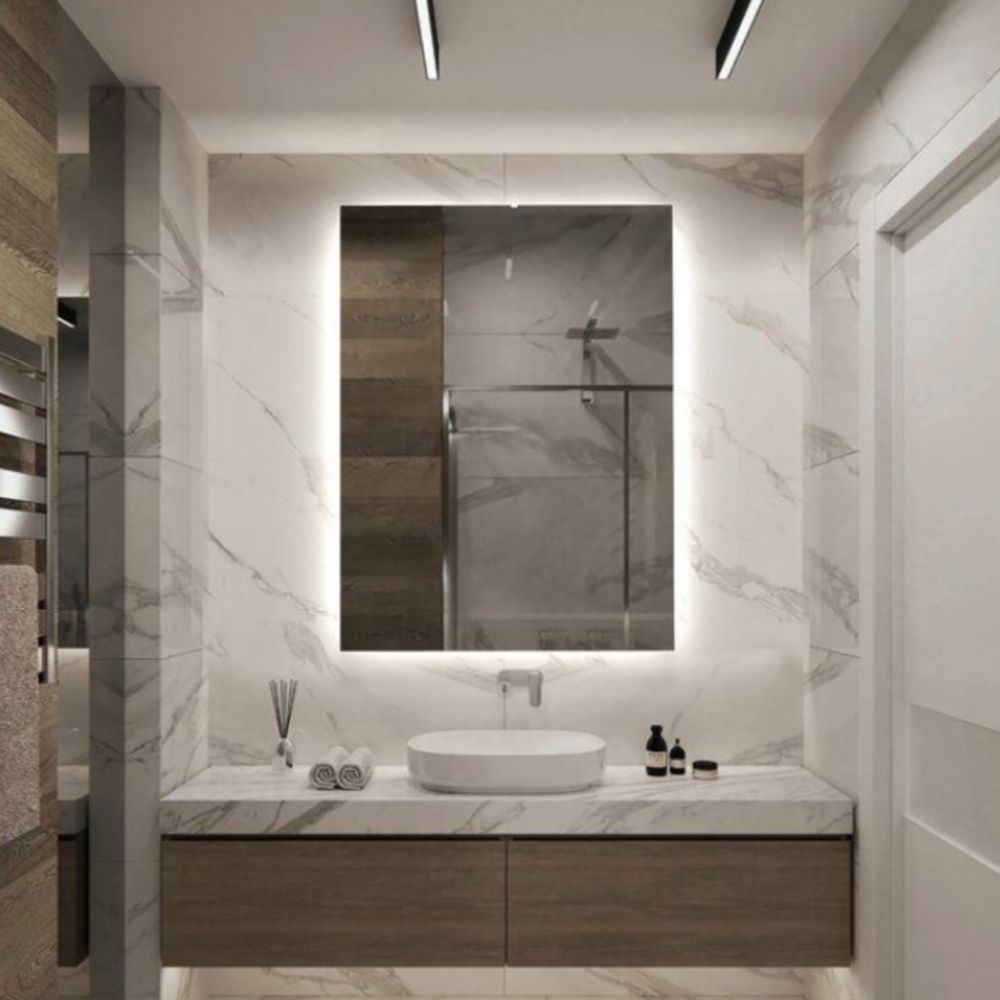
Minimalist spaces look best when the mirror feels integrated. Clean lines win here — frameless mirrors, slim profiles, and simple shapes. Rectangular mirrors are a natural match for floating vanities because the horizontal lines align easily. Round mirrors also work in minimalist interiors, especially if the room feels too sharp and needs a soft focal point.
For everyday use, neutral lighting tends to look clean without feeling cold, and it photographs well in modern interiors.
Scandinavian / Japandi
Japandi and Scandinavian bathrooms are calm, warm, and natural. The most important detail here is the light tone. If the mirror light is too cool, the room can instantly feel less cosy.
Soft shapes (round, oval, gently rounded rectangles) work beautifully with wood textures, beige tiles, and warm stone. Pair that with warm-to-neutral lighting and you get a relaxed, spa-like feel without trying too hard.
Industrial / urban
Industrial bathrooms usually have contrast: darker fixtures, concrete textures, bold tile patterns, or black accents. Structured mirrors (often rectangular) look intentional in these spaces because they reinforce the strong geometry.
In industrial interiors, scale matters. A slightly larger mirror can look more high-end, especially if the wall behind it is darker — the mirror becomes a focal point, not just a functional item.
Luxury hotel look
If you want that hotel bathroom vibe, focus on two things: scale and lighting. Hotels rarely choose small mirrors. They use larger mirrors, clean shapes, and even illumination to create that premium feel.
This is also where features like a dimmable LED mirror make a difference. In the morning you want bright, practical light. In the evening, softer dimmed light makes the room feel calmer and more luxurious.
LED bathroom mirror ideas, room by room
One reason LED mirrors are popular is that they’re versatile. The same design principles apply across rooms — but the best choice changes slightly depending on how you use the space.
Bathroom vanity ideas (single sink)
For a single vanity, the mirror should feel proportionate and centered. If your bathroom is small, don’t be afraid of a slightly larger mirror — it can visually expand the wall and make the room feel more open.
A simple approach:
- Choose a shape that matches the room’s lines (round to soften, rectangular to align).
- Make sure the mirror doesn’t feel lost above the vanity.
- Pick lighting that supports daily grooming without harsh shadows.
This is where LED mirror design ideas meet real life: if you do makeup or shave daily, even illumination matters more than a dramatic glow.
LED mirror for small bathroom: what works best?
A small bathroom can look surprisingly high-end with the right mirror choice. The mirror becomes a visual trick: it reflects light and creates the feeling of more space.
In a small bathroom, avoid a tiny mirror with lots of empty wall around it. A larger mirror often looks cleaner and more intentional. Round mirrors can also help because they feel lighter and less “blocky” than a large rectangle in a tight space.
If the room feels narrow, a taller mirror can visually add height. If the room feels short, a wider mirror can visually open it up. Keep the area around the mirror uncluttered so the mirror becomes the focal point.
Double vanity LED mirror ideas: one large vs two mirrors
This is a classic design dilemma.
One large mirror looks seamless and premium, especially with a long floating vanity. It’s a strong option if you want a calm, modern, hotel-like aesthetic.
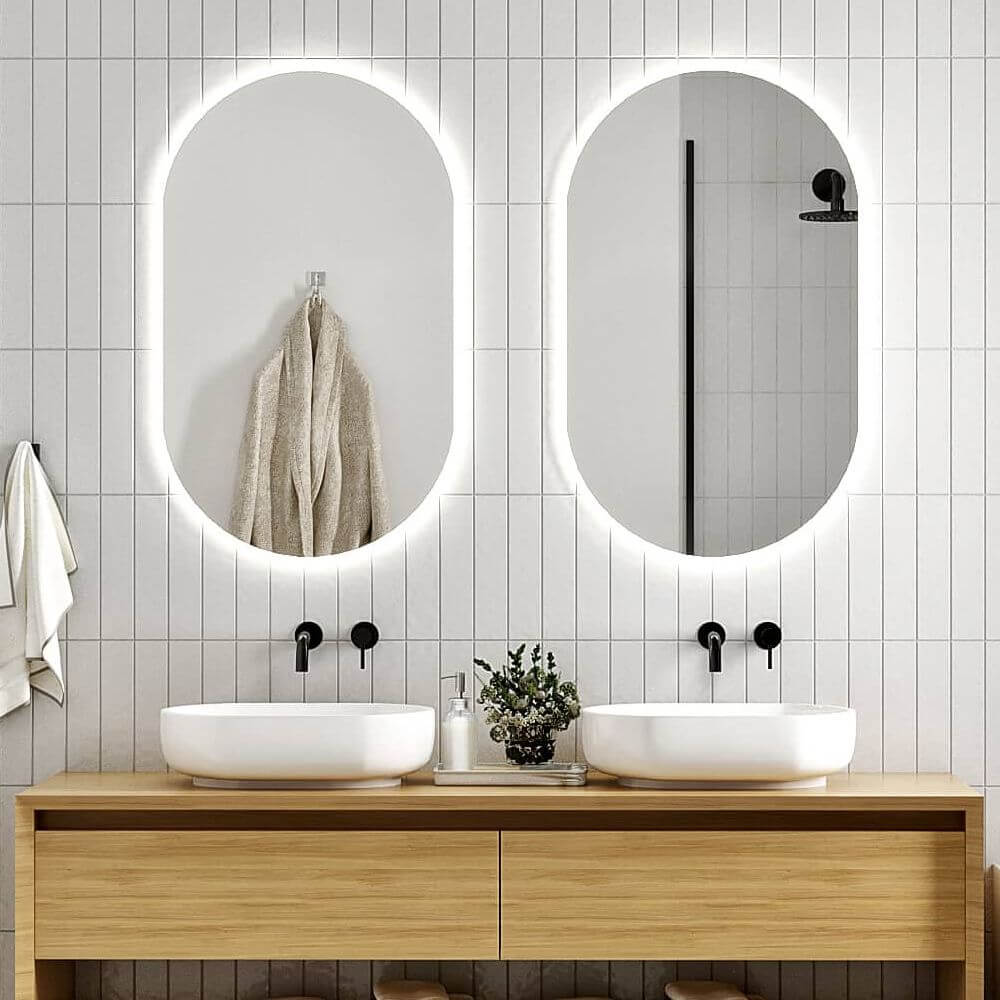
Two mirrors create symmetry and structure. They work well if the wall is divided (for example, with a window or tall cabinet in the center), or if you want a balanced “his-and-hers” look.
If you’re unsure, look at your wall layout. If the wall reads as one clean surface, one large mirror often looks best. If the wall is naturally divided, two mirrors can feel more intentional.
Entryway and hallway ideas
In hallways, the mirror is less about grooming and more about light. A soft glow can make a narrow space feel more welcoming. It’s also one of the easiest ways to make an entryway feel modern without adding lots of decor.
Placement matters here. Put the mirror where it reflects open space or natural light, not clutter. If you want a clean look, keep the styling minimal — one console table and one or two simple objects is enough.
Bedroom and dressing area
In bedrooms, LED mirrors are often used for outfit checks and getting ready. This is where flattering lighting matters. Even illumination helps avoid shadows under the eyes and chin, which can be frustrating for makeup.
A dimmable mirror works especially well in bedrooms because the same mirror can be functional in the morning and softer at night.
Living room accent mirrors
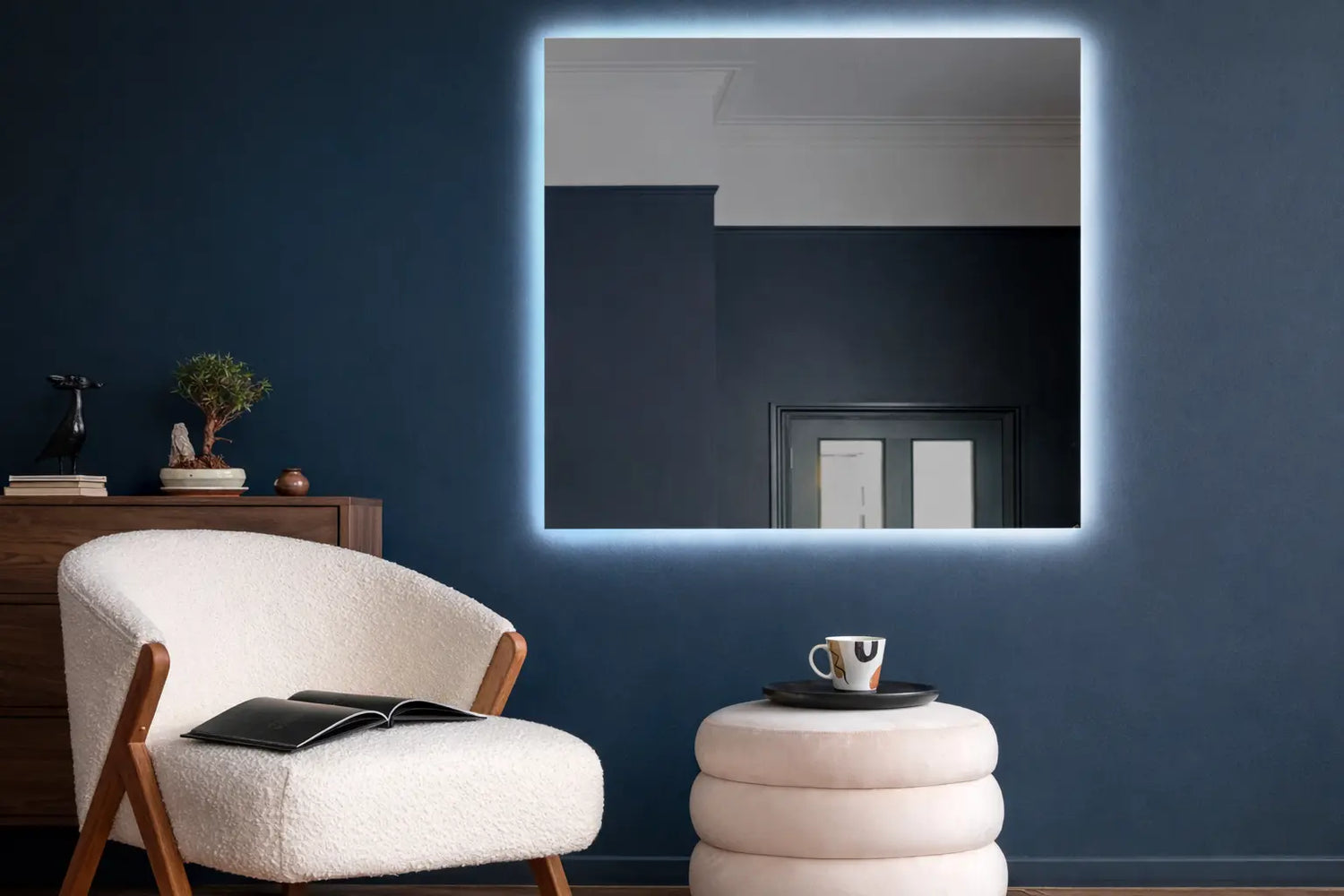
Yes, LED mirrors can work in living rooms — especially if you treat them like a design statement. This is where asymmetrical LED mirror ideas shine. The key is restraint: keep the wall around the mirror clean so the mirror reads like art.
If the space is already busy, an asymmetrical mirror can feel chaotic. If the space is minimal, it looks bold and intentional.

Warm vs neutral light for bathroom mirror lighting
Lighting tone is one of the most important choices, and it’s where many people get stuck.
Warm light feels cosy and spa-like. Neutral light feels balanced and natural for daily routines. Cool light can feel crisp, but in some interiors it reads clinical — especially in warm-toned bathrooms.
What color temperature is best for bathroom mirror lighting?
For most modern bathrooms, neutral lighting is the safest all-round choice because it looks clean, works for grooming, and doesn’t distort tones too much.
Warm lighting is excellent for cosy, relaxing bathrooms and homes with warm tiles and wood. Cool lighting can work in very crisp, white/grey/black bathrooms — but if your walls are beige or warm-toned, cool light can make the room feel less inviting.
If you want your mirror to look good both day and night, dimming is a major advantage.
Why a dimmable LED mirror changes the mood
A dimmable mirror gives you flexibility. Bright light is great for tasks. Dimmed light turns the mirror into ambience. That’s why dimming is both a functional feature and a design feature — it changes how the room feels without changing anything else.
Common design mistakes to avoid
Even great LED mirror design ideas can fail if a few practical details are ignored.
One common mistake is choosing a mirror that’s too small for the vanity. It makes the wall look unfinished. Another mistake is choosing lighting that fights your interior. Very cool lighting in a warm beige bathroom often looks harsh. Finally, don’t forget real-life comfort. If your bathroom gets steamy, anti-fog can become one of those features you appreciate every single day.
Quick “shop the look” inspiration
If you want a simple way to choose without overthinking, start with the vibe you want and match the mirror accordingly:
- Minimalist modern: clean rectangular or simple round, neutral light
- Japandi/Scandi: softer shapes, warm-to-neutral light, calming glow
- Industrial: structured rectangular, larger scale, crisp modern look
- Luxury hotel: oversized mirror, seamless shape, dimming for ambience
FAQ: LED mirror design questions people ask most
Are LED mirrors good for modern interiors?
Yes. Modern interiors suit clean lines and integrated lighting. LED mirrors add function and a premium look with less visual clutter than extra wall fixtures.
What shape LED mirror looks best in a small bathroom?
Round and vertical mirrors are popular because they feel lighter and can visually add height. The best choice depends on the vanity width and available wall space.
Are asymmetrical LED mirrors still in style?
Yes. Asymmetrical mirrors are popular in contemporary interiors, especially when the wall space is clean and the mirror is treated as a statement piece.
Do LED mirrors provide enough light for makeup or shaving?
Many do, especially when the illumination is even and bright enough for task use. For the best experience, look for mirrors designed to minimize shadows and offer dimming for flexibility.
Where should I place an LED mirror in a bathroom?
Place it centered over the vanity at a comfortable eye level. If you’re designing the full wall, consider how the mirror aligns with faucets, tiles, and any side lighting for a balanced look.
Next reads:
LED mirror installation & care guide
Bathroom mirror trends 2026